WHAT IS AGILE? WHAT is scrum?
Agile software development is a group of software development methodologies, where requirements and solutions evolve in small iterations through collaboration between self-organizing cross-functional teams. Agile development refers to any development process that is aligned with the concepts of the Agile Manifesto.

Scrum is a subset of Agile. It is a lightweight process framework for agile development, and the most widely-used one. Scrum significantly increases productivity and reduces time to market relative to classic “waterfall” software development processes.
We are adapting the Agile Scrum process in order to
- Cope better with changing requirements
- Increase the quality of the deliverables
- Increase the productivity of the team and deliver more from available resources
- Be more in control of the project schedule
- Promote teamwork, have a fun at work and reduce friction within the team
SCRUM process in nutshell
- The product owner creates a prioritized requirement list called a product backlog.
- The scrum team is a self-organized, cross-functional team with a Scrummaster tasked to represent the team and remove impediments from its way
- During sprint planning, the team takes a few backlog items from the top of that prioritized list, a sprint backlog, and decides how to implement those pieces and what is the criteria of marking them complete according to the "definition of done"
- The team has a certain amount of time — a sprint (usually two to four weeks) — to complete its work.
- The team meets each day to assess its progress (daily Scrum stand up meeting)
- At the end of the sprint, the work should be potentially shippable: ready to deliver to a customer, or demonstrate to a stakeholder.
- The sprint ends with a sprint review and retrospective to do it better next time
- As the next sprint begins, the team chooses another chunk of the product backlog from the top of the stack and begins working again.
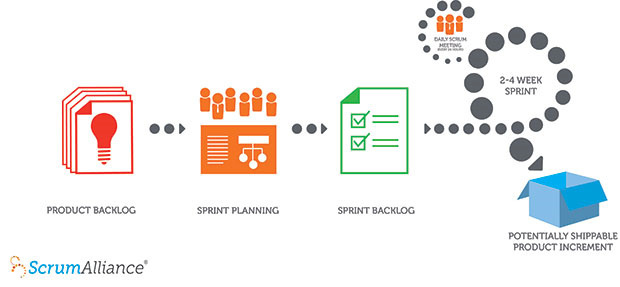
The cycle repeats until enough items in the product backlog have been completed, the budget limit is hit, or a deadline arrives. Which of these milestones marks the end of the work is entirely specific to the project. A lot of importance given in the process to have most high priority tasks get completed first and the output is fully functional and usable. No matter how and where you stop the work, Scrum ensures that the most valuable work has been completed when the project ends.

No comments:
Post a Comment